
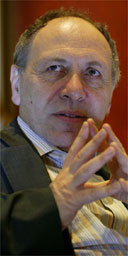
You can tell why ministers chose Stephen Jacobs to head the new social enterprise company that has been created to turn us into a nation of "expert patients". He has more than his fair share of the London East Ender's gift of the gab. It is almost impossible to disagree with what he has just said before he moves on to his next apparently incontrovertible point. By the time he asks what you think, you are just about ready to sign the cheque.
For the NHS, Jacobs, 57, is a breath of fresh air. Ministers have given him the task of expanding the Expert Patient Programme (EPP), a project that could improve the lives of millions of people with long-term medical conditions such as diabetes, arthritis and asthma. Teaching these people and their carers how to manage their condition helps them regain the confidence to lead fuller lives and avoid medical emergencies. It could also save the NHS a fortune.
The programme began four years ago as an in-house NHS effort,but without enough energy at the sharp end in primary care trusts (PCTs) where decisions are taken about the services available.
Jacobs, who is also chairman of Whipps Cross University Hospital trust, in east London, says he knows the problem at first hand. "It's clear that the acute hospitals gobble up the money and the PCTs channel it to them," he says. "They make amazing medical breakthroughs - face transplants one week and some exciting development in stem cell research the next. But we must not ignore the people suffering pain and the depression that goes with it. For many people, the best we can do is stabilise their condition. We can't make it better. To ignore that is to ignore the basics of people's lives."
The EPP organises courses run by volunteer tutors who have a long-term medical condition themselves. They teach people with a chronic illness to manage their condition and notice when changes occur that might require professional intervention. The cost to the NHS of running courses for two-and-a-half hours a week over six weeks is about £200 for each patient. Usually, between eight and 16 are trained at a time. That modest outlay can pay for itself many times over by reducing the number of visits patients make to the doctor. It can also ensure they do seek medical attention in good time when they need it.
Cost effective
Jacobs says the programme is not only massively cost effective but can also radically improve people's lives. He attended one of the courses so he would know what he was talking about in his new role and saw how the training made people less isolated. People with disabilities regained the confidence to accompany each other to the gym. A woman with polio took up the classical guitar again.
Jacobs' brief from the Department of Health was "to go out and multiply". Ministers asked him to increase the EPP's capacity from 12,000 places a year to 100,000 by 2012. But he says: "The brief I've given myself is to make people think learning about chronic disease is as normal as going to the chemist for aspirin or paracetamol. Achieving 100,000 would be good, but not excellent. Philosophically, we all have to understand that we can't cure everything, but there are ways of dealing with these conditions."
The vehicle for spreading this message - and getting PCTs to invest in it - is a community interest company (CIC). This new type of social enterprise can seek to make profits to benefit the community it serves. The concept was given legal status in 2004 and the EPP is the first example of a CIC with a national remit. It got its seal of incorporation last month when the government promised it would develop "exciting new approaches to self-management that will be more relevant to the young, vulnerable groups and ethnic minorities".
Jacobs says: "We are not pretending we are a voluntary body. We are a company and we have to pay our bills like everybody else. But CIC status lets us be more entrepreneurial and risk taking. We can keep the ethics of the public sector and gain the dynamism that is associated with the private sector."
He learned his way around the hinterland between the sectors in a career devoted to community development and urban regeneration. He was born in Hackney, east London, in 1949, one of identical twins. The family moved to Walthamstow in time for secondary school, where Jacobs says he "didn't get many ologies". His twin became a car salesman, "a proper entrepreneur", but Jacobs took a job as an accounts clerk and began collecting O-levels and A-levels at night school.
He started reading the now defunct magazine New Society and became interested enough in sociology to want to study for a degree. He chose Coventry because he liked the nearby swimming pool.
His degree prepared him for community development work in Pembroke Dock and at a Birmingham Citizens Advice service. He says he became "a paid rabble rouser" for the London Tenants Organisation, before moving into public sector housing management in Haringey and Newham.
Rescue squad
He got the job of writing the Stratford City Challenge, a regeneration plan in east London responding to an initiative by Michael Heseltine when he was environment secretary in Margaret Thatcher's first administration. Jacobs says: "The idea was to put Stratford on the map." It worked. Stratford Development Partnership was formed as a company and grew into "a regeneration rescue squad", delivering renewal programmes across London and elsewhere. "We saw a gap in the market and fell in it," he says. Jacobs does not claim credit for Stratford gaining the Channel tunnel rail link terminal and the Olympic games, but he hopes his obituary will say he tried to do his bit.
The experience has convinced him that successful social enterprise involves taking risks on behalf of the community in order to get things done. It is too soon to say which risks the EPP will have to take, but the challenge it faces is clear.
Jacobs has to convince PCTs - many of which are under financial strain - to commit to extra spending that may not provide them with immediate financial gain. "We want them to have some patience and recognise that the amounts of money are infinitesimal compared with what they spend on patients with long-term conditions going to the GP or A&E," he says.
"The worry is that PCTs give priority to meeting targets for prescribing drugs or cutting waiting times. My job is to make chronic disease management just as important to them. We need to double the number of courses we offer in 2007/8 and make sure most of them are paid for. The more enlightened PCTs are already engaged, but some did not take up courses even when they were offered free. This is not about price. It is about convincing people this is worth the time and effort."
Jacobs is being cheered on by charities that have long argued the case for helping people to manage their medical conditions. Their reservation is that the EPP is only a start. David Pink, chief executive of the Long-term Medical Conditions Alliance, says some charities are worried that their longstanding work in this field may get squeezed out by a government funded state monopoly. Jacobs says he wants the charities to take an equity stake in his venture and influence the number and shape of courses that are run.
Above all he wants to help tackle health inequalities. As he puts it: "We shouldn't have a postcode lottery in chronic conditions. People in poorer communities should get at least as good a service as the people of East Cheam."
Curriculum vitae
Age 57.
Status Married, with a son.
Lives Waltham Forest, east London.
Education Chapel End Secondary Modern school, Walthamstow; Lanchester polytechnic, Coventry, BA Hons social policy.
Career June 2006-present: chairman, Expert Patient Programme; 2003-present: chairman, Whipps Cross University Hospital trust; 2004-06: director, Canning Town and Custom House Regeneration Project; 1992-2004: chief executive, Stratford Development Partnership; 2003-04: director of community relations, London 2012 Olympic Bid Team; 1985-92: leader of the City Challenge team, London borough of Newham; 1983-1985: housing management, London borough of Haringey.
Interests Theatre, amateur dramatics, cycling, current affairs and "making Kendal smile" (his foster grandson).
· Any comments on this article? Write to society@theguardian.com
